Ethan Crossing of Cleveland


Ethan Crossing of Cleveland 3 photos
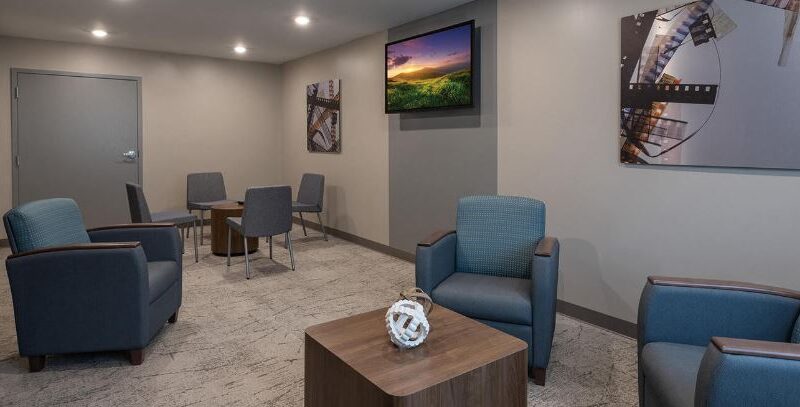

Ethan Crossing of Cleveland is an addiction-treatment center at 20611 Euclid Avenue in Euclid, Ohio. The campus describes dedicated men’s and women’s residential units in a non-hospital setting.
The center lists medically supervised detoxification, residential treatment, partial hospitalization, intensive outpatient and outpatient care, dual-diagnosis treatment and aftercare. PHP and IOP clients return home outside treatment hours; residential clients live on site. Standard residential options are described as 30, 60 or 90 days, while each treatment plan is individualized.
The current program phone is 855-967-2436. The provider says most private and employer health-insurance policies are accepted, subject to verification; authorization, patient cost, self-pay price and tax treatment require confirmation.
Confirm the Euclid destination and the receiving program
The Cleveland contact page lists 20611 Euclid Avenue in Euclid, Ohio, and 855-967-2436. It also mentions separate Ethan Crossing locations in Springfield and Columbus. Confirm that the admission, appointment, and any accommodation proposal concern the Cleveland-area service identified in this profile.
Location matters when arranging transport, family involvement, and follow-up after residential care. Ask for the receiving unit or program, the appointment time, and any outstanding clinical or financial requirements before traveling. If a hospital or outside clinician is coordinating admission, agree on how records, medication information, and the transfer plan will reach the appropriate staff. A shared provider name does not establish identical services or policies across cities. The contact team should explain where treatment takes place, where the patient will sleep at the proposed level of care, and who can resolve questions during the transition.
The broader provider description needs campus-specific interpretation
The provider overview describes dedicated men’s and women’s residential units, fitness facilities, courtyards, and comfortable rooms. It also discusses more than one Cleveland-area center and a combined residential and outpatient capacity. Those network descriptions should not be read as the bed count or accommodation specification of a single unit.
Ask about the actual room assignment, shared spaces, accessibility, and daily routine for the proposed admission. The overview describes CBT, DBT, trauma therapy, motivational interviewing, and simultaneous attention to substance use and co-occurring mental health concerns. Clarify how psychiatric assessment and medication management are provided within the selected program, and whether any specialist care requires another clinician. A broad dual-diagnosis description should be narrowed to the person’s actual needs. Someone seeking primarily psychiatric treatment without a substance use disorder should specifically confirm eligibility and the appropriate receiving service.
Referrals and insurance questions are part of admission planning
The admissions page describes referrals from loved ones, employers, and professionals, with admissions staff helping people access treatment. It says most private and employer health insurance is accepted. This provides a route for an inquiry, but the proposed care and its financial arrangements still need individual confirmation.
Discuss the person’s current needs, recent treatment, medication, and any relevant medical or psychiatric concerns with the receiving team. Ask what evaluation is required and what would lead to a recommendation for another service. When someone else makes the referral, clarify the patient’s participation and the consent required before information is shared. For insurance, obtain the specific network position, authorization requirements, expected covered days or sessions, and personal costs. A broad statement about private insurance does not establish approval for a particular policy. Keep the clinical recommendation and financial estimate clear before committing to admission or arranging a transfer.
Detox is delivered in an on-site, non-hospital setting
The detox page says patients stay on site while receiving medical support, therapy, and counseling. It describes physicians and nurses helping manage withdrawal and the possible use of medication for symptoms and cravings. The provider identifies this as care in a non-hospital setting.
Ask the clinical team how it assesses withdrawal risk, what monitoring is available, and which medical or psychiatric needs require hospital care or another service. The site’s broad descriptions of comfort and safety should not be interpreted as a guarantee that complications cannot occur. Discuss current prescriptions and any existing addiction medication before admission so continuity can be planned with the appropriate clinicians. Detox is an assessed clinical decision, not an automatic requirement for every person who seeks counseling. If further residential or outpatient treatment is recommended, identify the next service, the transition criteria, and how its costs and appointments will be arranged.
Residential treatment has published duration options
The residential program page describes standard 30-, 60-, and 90-day options alongside individualized treatment planning. Residents live on site and participate in a daily program of therapy and activities. Published amenities include meals, fitness facilities, landscaped courtyards, and lounge spaces.
Use the advertised durations as discussion points rather than an automatic prescription. Ask why a particular length is recommended, how progress is reviewed, and what happens if the clinical plan or insurance authorization changes. The page describes individual, group, family, cognitive-behavioral, dialectical behavior, trauma-related, and motivational approaches. Request the actual weekly timetable and the expected individual appointments for the selected unit. Daily programming does not necessarily mean every listed therapy occurs daily. Discuss room arrangements, communication rules, and practical responsibilities at home before admission. The discharge plan should identify the next level of care and the support needed to make that transition workable.
PHP provides daytime care while patients live elsewhere
The partial hospitalization page says participants attend treatment during the day and return home afterward. It describes therapy, needed medical care, and attention to concerns such as anxiety, depression, trauma, and family difficulties. A clinical assessment determines whether this is an appropriate starting point or a transition after more intensive care.
Confirm the current days and hours, individual appointments, and any transportation requirements. Daily clinical contact does not provide overnight monitoring, so the team should consider the person’s medical stability, home environment, and available support. The website includes questions about previous treatment and recovery support; those questions are prompts for a discussion, not a substitute for assessment. Ask what support is available between sessions and how deterioration would be handled. Someone comparing PHP with residential treatment should also clarify the separate costs and responsibilities of living off site, rather than assuming accommodation is part of the daytime program.
IOP includes a defined group-therapy commitment
The intensive outpatient description lists 10 to 12 hours of group therapy per week, with individual appointments in addition. Patients attend the center and return home outside treatment hours. The page also encourages participation in a 12-step support program.
Ask for the actual calendar, including the number of attendance days, session times, individual appointments, and how those commitments fit work, childcare, or education. A description of flexibility should not be read as a promise that every schedule can be accommodated. The provider discusses a stable home environment and recovery support as considerations, but the clinical assessment should guide the decision. Clarify how medication and co-occurring mental health care continue, what progress reviews involve, and when more or less support might be recommended. Before stepping down from residential care, confirm the first IOP appointment and a practical plan for the hours outside treatment.
Individual sessions provide space for a personal treatment focus
The individual therapy page describes weekly one-to-one meetings and approaches including CBT, DBT, contingency management, and motivational enhancement. Sessions may address substance use, mental health symptoms, daily stress, past experiences, and what the person is learning in group treatment.
Confirm the expected frequency and duration for the selected clinical program, because a general therapy description does not establish every unit’s timetable. Ask who the assigned clinician will be, how goals are agreed, and how progress or concerns can be reviewed. The value of a personal plan is in connecting the patient’s priorities to actual work during sessions. A list of methods does not mean every method will be used, or that one approach is suitable for all problems. If trauma-related work is proposed, discuss readiness, pacing, privacy, and how it fits with immediate stabilization and longer-term follow-up.
Group treatment has a published size and session range
The group therapy page describes groups typically containing four to 12 participants, with sessions lasting one to two hours. A therapist guides discussion, and topics may include coping skills, mental health concerns, and recovery experiences. The provider says people who are not ready to share immediately will not be forced to do so.
These are published examples rather than a guarantee of the size of every current group. Ask how groups are organized, which sessions are clinical therapy versus education or peer support, and how the schedule relates to individual appointments. Discuss confidentiality expectations and how staff respond when a group becomes difficult or a participant needs additional support. Participation should support treatment goals without requiring someone to recount every personal experience publicly. If a particular group format has been unhelpful before, explain that during assessment so the team can discuss the relevant options and limits.
Family therapy should have agreed goals and boundaries
The family therapy page describes facilitated discussions about the effect of substance use on relationships, communication, conflict, and supportive behavior. It presents this work as a complement to individual and group treatment.
Clarify which relatives or chosen supporters can participate, how sessions are arranged, and whether remote attendance is possible when family members live elsewhere. The therapist should explain consent, confidentiality, and the purpose of sharing information. Family involvement should account for relationship safety and the patient’s preferences. It is not an assumption that relatives caused the disorder or that every relationship must be repaired during a stay. Ask whether a family member with their own support needs should seek separate care. Practical goals may include more effective communication and a workable discharge plan, while any promise of a guaranteed relationship or recovery outcome would exceed what the program description establishes.
The men’s program combines peer and individual treatment
The men’s program page describes personalized plans, groups with other men, co-occurring mental health care, and access to different clinical levels. It also lists wellness activities such as exercise, yoga, and meditation alongside counseling and medical support when needed.
Ask how the men’s program is organized within the actual receiving unit: which groups are separate, how individual therapy is scheduled, and which activities are shared. A gender-specific track does not establish the same needs or preferences for every participant. Discuss comfort, privacy, and any relevant accommodation request during assessment. The provider’s descriptions of peer connection should be understood as features of the program rather than proof that this format is preferable for everyone. Clinical suitability, medical support, and a realistic continuing-care plan remain central to the decision. Optional wellness activities should be distinguished from the therapies and appointments that make up the clinical plan.
The women’s program describes trauma-informed participation
The women’s program page describes women-only groups, individual therapy, family work, and attention to substance use and mental health symptoms. It emphasizes a trauma-informed environment and individualized planning, with detox support when clinically needed.
Ask how the team addresses privacy, safety, and preferences about discussing sensitive experiences. A supportive group can coexist with a decision to reserve particular topics for individual sessions. Clarify the actual unit arrangements, the clinical staff involved, and whether additional specialized care would need an outside referral. The page lists residential, outpatient, and aftercare pathways, so confirm which services are appropriate and currently available for the individual. Before discharge, agree on the receiving clinician, medication follow-up if relevant, and the first appointments. Comfortable rooms and shared recreational spaces can support daily life during treatment, while the specific care plan and its continuity deserve separate attention.
Official sources
Official provider sources checked October 13, 2026.