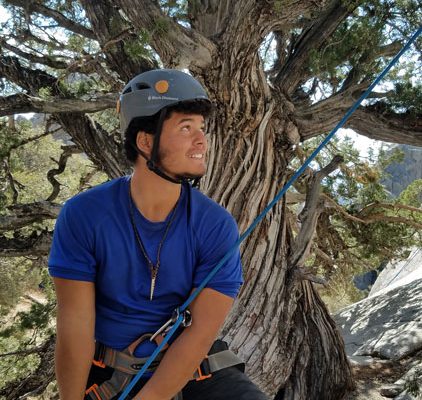
blueFire Wilderness Therapy is a licensed outdoor and adventure-therapy program in south-central Idaho. Its adolescent program serves girls and boys ages 11–17, while the separate blueFire PulsaR program serves young adults ages 18–28. The provider focuses on emotional, social and behavioral challenges rather than operating as a conventional residential addiction-rehab campus.
The model combines wilderness expeditions, base camps, individual and group therapy, family work, equine therapy, academics and rotating activities such as hiking, rock climbing, paddling and mountain biking. Clients typically stay 10–12 weeks, although actual length depends on progress and treatment goals. Sleeping arrangements alternate between tents or shelters on expeditions and heated yurts or canvas shelters at base camp.
Evaluate the outdoor treatment model
The official blueFire FAQ describes a program combining base-camp living, expeditions and therapeutic work, typically over ten to twelve weeks. It says actual length depends on progress and treatment goals. That format differs materially from staying in a hospital or a conventional residential building, so the decision should consider more than a list of activities or a preferred length of stay.
Ask how the team evaluates suitability for outdoor living, the person’s current physical and mental health needs and the support available during expeditions. The FAQ describes a therapist’s regular involvement with the group, but group presence should not be read as the same number of private therapy appointments. Clarify the actual individual schedule and how progress will be communicated. A suitable plan should also explain what happens if needs change or the outdoor model proves inappropriate. The published duration is a program estimate, not a reason to postpone reassessment or insist that every participant complete the same number of weeks.
Admissions should clarify fit before travel
The admissions process page describes an application and review before enrollment, and says submitting an application does not create a commitment. The team reviews the information provided to decide whether the program is a fit. Its preferred arrival arrangements and examples of review timing should be confirmed for the actual application rather than treated as a guaranteed same-day place.
Provide an accurate treatment history and describe any current safety concerns, medication, disability or physical health needs. Ask who makes the clinical admission decision and what information they require from existing clinicians. The person entering treatment should understand where they will be living, the expectations and the ways to raise concerns or request a review. Families should discuss voluntary participation and a safe travel arrangement without treating a transport option as a substitute for consent or assessment. Obtain the admission decision, practical arrival instructions and a plan for an unsuitable placement before making irreversible travel or housing decisions.
Family involvement follows a structured process
The family program page describes regular therapist contact, parent learning and work intended to connect the participant’s experience with changes at home. It outlines weekly parent-therapist calls, family therapy beginning during the program and a four-day Family Spark experience near graduation. These are distinct components, so families should establish who is expected to participate and what attendance or travel each component requires.
The page also describes parent support and transition-related work. It says some families use its Tend continuing support, rather than promising that every family automatically receives the same post-program service. Ask what is included in the quoted fee, what may be optional and who will coordinate follow-up after departure. Discuss how the process can accommodate separated households, unavailable caregivers or relationships in which joint sessions need careful planning. Family participation should be guided by the person’s needs and appropriate information-sharing agreements, not an assumption that every relative is entitled to the same clinical information.
Confirm the academic arrangement with the receiving school
The academics page describes coursework and educational support alongside outdoor treatment. It names educational partnerships and refers to credit-bearing study. These are provider descriptions of the program’s academic arrangements, not an independent accreditation check or a guarantee that a particular school will accept every credit. A family’s existing school and the program should agree on the practical details before enrollment.
Ask who supplies assignments, supervises coursework and issues any transcript, and how the school will recognize attendance or completed work. Discuss existing learning accommodations and what can realistically continue during field activities. If educational or psychological testing is proposed, clarify its purpose, provider, report, cost and how it will inform the next setting. The academic plan should reflect the student’s current capacity rather than promise that treatment automatically prevents falling behind. Before departure, obtain the records and contacts needed to support a transition back to school or another appropriate educational arrangement.
Daily routines vary between base camp and expeditions
The day-in-the-life page describes routines involving meals, practical tasks, daily goals and therapeutic activities. It distinguishes time at base camp from adventure or expedition periods, with examples such as equine sessions, laundry, letters, journaling and group activities. The available schedule is an illustration of program life rather than a guarantee that every participant follows the same route or activity sequence.
Ask for the expected rhythm of the actual group, including where participants sleep, how personal hygiene is managed and how weather changes the schedule. Clarify how clinical appointments and educational work fit into the day and what alternatives are available when an activity is unsuitable. The useful comparison is the full living experience, including ordinary tasks and time outside formal therapy. A list of climbing, paddling or hiking opportunities does not show the amount of individual treatment received. Families should understand both the therapeutic contact and the practical demands of the setting before deciding whether it fits.
Examine the provider’s safety and medical arrangements
The safety page describes staff screening and training, a stated one-to-four staff-to-client ratio and field communication procedures. It also describes trained staff supporting prescribed medication and access to medical professionals, with transfer to a medical facility when an illness cannot be managed in the field. These are provider-reported arrangements, not an independent inspection or a guarantee that outdoor treatment is risk-free.
Ask which clinicians are available directly, which are contacted remotely and how quickly the group can reach appropriate medical care. The page calls activities challenge-by-choice and says hiking will not proceed if a participant is unwilling or unable, or when specified temperature limits are exceeded. Clarify how declining an activity works in practice and how a concern about pain, exhaustion or distress is escalated. Discuss medications, allergies, mobility, access to water and communication with home beforehand. The program should be able to explain its current procedures for the specific group, season and participant rather than rely only on general reassurance.
PulsaR is a separate young-adult program
The PulsaR program page describes a coeducational pathway for young adults aged 18–28 with emotional, behavioral and social challenges. It combines therapeutic work with outdoor experiences and planning for greater independence. Its stated audience is different from the adolescent groups, so a teen program’s timetable, family arrangements or eligibility should not automatically be applied to a young adult.
For an adult applicant, discuss the goals they want to work on and how they will participate in decisions about treatment and family involvement. Ask what practical transition planning covers, including returning to education, employment, housing or ongoing outpatient care. Those goals need an individual plan rather than a promise that an outdoor placement will resolve every difficulty with independence. Clarify the current group, clinical contact, living conditions and continuing support. If the person needs a different intensity or type of healthcare, ask how that will be identified and arranged before enrollment or during a review of the placement.
Financial aid and insurance are separate questions
The financial-aid page describes a possible application to Sky’s the Limit Fund after acceptance to the program and before entry. Support depends on the fund’s criteria and should not be treated as an automatic reduction in the bill. Confirm the application sequence and any decision deadline before committing to expenses that depend on assistance being approved.
The page says blueFire does not bill insurance directly, but can provide documentation such as clinical notes, codes and invoices for a family’s reimbursement inquiry. It also acknowledges that coverage decisions can be difficult. Obtain confirmation from the actual insurer rather than assuming that an invoice or a healthcare advocate guarantees payment. Request the complete program quotation, payment schedule and rules for changes or early departure. Separate the possible grant, the provider’s payment requirements and any later reimbursement: approval in one area does not establish the amount or timing available from the others.
Clarify the amount and purpose of clinical contact
The clinical approach page describes an individualized treatment plan and regular involvement by primary and milieu therapists. Its description of therapists being present four or five days weekly includes work within the group environment. It should not be interpreted as four or five private therapy appointments for every participant. Ask which sessions are individual, group or family-based and how long each normally lasts.
The page lists several therapeutic approaches and describes additional evaluations for some participants. A list of modalities does not mean that each is clinically appropriate, provided by the same professional or automatically included in every fee. Ask the treating clinician why a particular approach is proposed, how progress will be assessed and what will change if it is not helping. Clarify the purpose and cost of any additional evaluation before agreeing to it. The plan should connect the work in the outdoor setting with continuing care afterward, rather than present the setting itself as sufficient treatment for every concern.
The Embers group has a younger age range
The Embers program page identifies a group for boys aged 11–14. It describes two individual therapy sessions and four therapist-led groups each week, equine work and regular therapist involvement. Parents work with the same therapist and receive scheduled contact. These details belong to that named group and should not be generalized to every adolescent or young-adult program within blueFire.
For a younger participant, ask how developmental needs affect communication, supervision, education and the physical demands of activities. Discuss the child’s understanding of the proposed placement, their existing supports and how they can express discomfort or request help. The program describes both base-camp and expedition experiences, so confirm the current arrangements and any adaptations before admission. An age match alone does not establish clinical suitability. The assessment should explain why this setting is being proposed, what alternatives have been considered and how the child’s progress and wellbeing will be reviewed with appropriate family involvement.
Families receive regular therapist contact and participate in transition planning. Before discharge, the treatment team assesses next-step needs and may recommend a home therapist or educational consultant. The official FAQ says the program can refer families to a healthcare advocate to explore reimbursement when a policy includes that benefit; it does not promise insurance payment. Sources checked October 13, 2026.