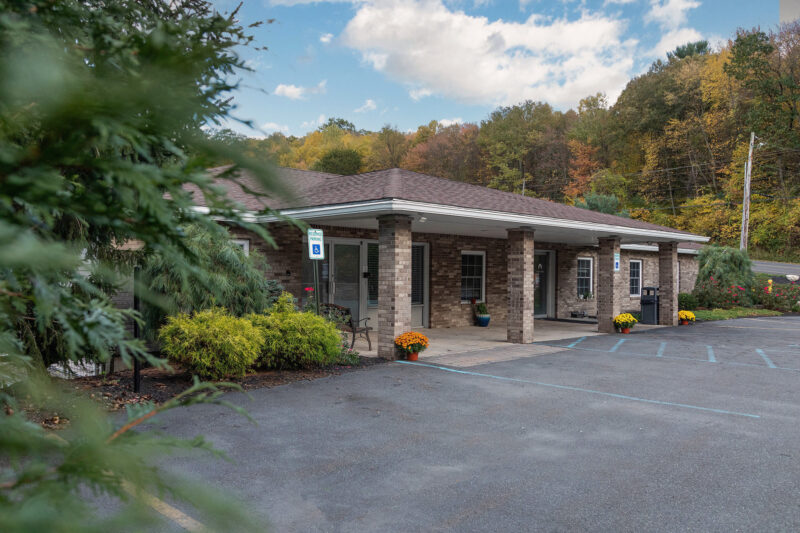
Pennsylvania offers addiction treatment in several settings, including residential campuses, hospital-related programs, and outpatient services. Choosing a luxury rehab requires more than identifying an attractive property. The useful comparison is whether the actual program can address the person's substance use, mental health, physical health, and practical needs. Start with an assessment and a clear treatment recommendation, then compare privacy, location, daily routine, and the full cost of care.
Compare Pennsylvania locations and treatment populations
Caron Pennsylvania is based in Wernersville. Its current campus information describes addiction care for patients aged 16 and older, including co-occurring mental health and complex medical needs. That broad campus description does not mean every program accepts every patient. Ask which age-specific or clinical pathway is recommended and where the admission will take place.
Geisinger Marworth describes inpatient and outpatient addiction treatment north of Scranton on its official website. Its program information also identifies options such as outpatient and professional-focused care. Clarify the service and schedule relevant to the individual rather than assuming that all network services use the same daily routine or accommodation.
These are different geographic and clinical choices. A family in the Reading area may face a different travel commitment from a family near Scranton or one arriving from another state. Consider the actual admission address, family participation, and the location of the next phase of care. A campus description alone does not show whether the complete pathway will be practical.
Consider age and physical health when assessing fit
For an older adult, substance use treatment may need to account for physical illness, prescribed medications, mobility, cognition, grief, or isolation. Caron's older-adult program information specifically discusses concerns including loss, chronic pain, and co-existing conditions, and distinguishes its Pennsylvania and Florida medical-center options. Confirm which location and program the team is proposing rather than transferring details from one state to the other.
Ask how the receiving team reviews medications, coordinates with existing physicians, and accommodates mobility or other daily living needs. A scenic property may still involve stairs, long walking distances, or activities that are unsuitable for a particular patient. Obtain practical information about the actual room, bathroom, access routes, and support available.
For a teenager or young adult, ask different questions: the accepted age range, peer group, guardian involvement, school or college coordination, and how the program addresses developmental needs. A provider serving patients from age 16 does not imply that every adult group or accommodation arrangement is appropriate for a 16-year-old.
Separate withdrawal management from rehabilitation
Withdrawal management assesses and treats symptoms that can occur when substance use is reduced or stopped. Whether it is needed, and in what setting, depends on clinical assessment. Explain recent use, previous complications, prescribed medicines, and relevant physical health conditions before traveling. Do not select a detox duration from a general online timetable.
Ask who provides medical monitoring, which clinicians are present on site, and what would require transfer to a hospital. A residential program can provide useful addiction treatment without being equipped for every medical problem. The terms inpatient, residential, and hospital should be clarified in the context of the actual service being offered.
Ongoing rehabilitation has a broader purpose than managing immediate withdrawal. Discuss psychological treatment, medication when appropriate, practical recovery skills, and continuing support. A person whose withdrawal symptoms have settled may still need substantial care, while another person may be able to begin treatment through an outpatient pathway.
Use Pennsylvania's official treatment and funding routes
The Pennsylvania Department of Drug and Alcohol Programs provides information for locating treatment. It identifies county drug and alcohol offices, known as Single County Authorities or SCAs, which can help with assessment, referrals, and treatment funding. This can be a useful route when a person is unsure where to begin or when a private offer is financially out of reach.
An SCA referral is not an automatic guarantee of a place at a particular luxury program. Ask about eligibility, the recommended service, available providers, and the next step in the local process. A clinically appropriate public or insurance-funded pathway may be more workable than delaying all care while trying to finance a preferred residential property.
For provider checks, the state's drug and alcohol facility locator allows searches by factors such as location, facility type, name, and owner. Compare the relevant facility record with the program and address in the admission offer. Ask for clarification if the public brand and licensed operator differ.
Ask how co-occurring conditions will be treated
A person may seek addiction treatment while also experiencing depression, anxiety, trauma-related symptoms, or another mental health concern. Ask whether the team can assess and treat those needs together, who provides psychiatric evaluation, and how therapists and prescribers communicate. The phrase dual diagnosis should be supported by a practical description of care.
Also clarify whether the program accepts a primary mental health condition without substance use. A website may list depression because it occurs alongside addiction; that does not establish that the same program offers a specialist depression admission. Describe the actual symptoms and history so the clinician can explain the appropriate pathway or recommend a different service.
Relevant records from previous treatment can make the assessment more useful. Ask what information the receiving team needs, how consent will be handled, and whether existing clinicians can take part in planning. A coordinated handoff is preferable to losing important history when moving between programs.
Compare the content of a treatment week
Request a schedule showing individual therapy, group sessions, medical appointments, family work, and other activities. Find out who leads each element and how the treatment goals are reviewed. A program that advertises many approaches should still explain which ones are recommended for the patient and how they will be delivered.
Ask about the purpose and composition of groups. An age-specific group, a professional-focused group, and a general recovery group may address different concerns. The relevant issue is whether the setting helps the patient engage with the treatment goals, not whether a specialty label sounds prestigious.
Complementary activities such as exercise, creative work, or relaxation may support participation, but they should be distinguished from the main clinical treatment. Check whether they are optional, included in the fee, and adaptable for medical or mobility needs. A program should remain clinically useful when a patient cannot take part in a particular activity.
Plan family participation with the patient's consent
Ask how family or supportive-person involvement is arranged and what it is intended to accomplish. Useful work may include communication, boundaries, practical support, and preparation for returning home. Clarify who the patient wants involved, what information can be shared, and whether remote sessions are available when relatives live far away.
For a professional-focused program, also ask how treatment relates to any existing professional health or employment process. Marworth identifies healthcare-professional services, but clinical treatment and a decision about professional practice are separate matters. Confirm required documentation and the responsible decision-maker rather than assuming that finishing a program guarantees a particular work outcome.
Calculate the full cost rather than a headline daily rate
Request a written estimate identifying the program, expected duration, clinical services, and accommodation. Ask about medications, laboratory testing, outside consultations, transport, and any optional upgrade. Where withdrawal management and rehabilitation are billed separately, obtain estimates for both. If care may continue in an outpatient setting, include those likely costs in the comparison.
For insurance, verify the specific member plan, location, and care level. Ask about network status, authorization, deductibles, coinsurance, and services billed by independent clinicians. Clarify who contacts the insurer if the treatment recommendation changes and what the patient may owe if additional days are not authorized.
Also discuss the financial consequences of an early departure, extension, or medical transfer. A clear written policy is more helpful than a general promise of flexibility. If a private arrangement remains unaffordable, use Pennsylvania's treatment navigation resources to explore other suitable care rather than treating price as a measure of clinical quality.
Make the return home part of the admission plan
Marworth's published outpatient information includes in-person and telehealth options, with evening or weekend appointments potentially available. Confirm an actual place and schedule rather than assuming that flexible hours apply to every service. For a person balancing work, caregiving, or a long journey, the difference between a possible option and a booked appointment is significant. Ask who will address any gap before the first visit and whether the proposed virtual care is appropriate in the patient's location.
Ask where care will continue after the current program and who will arrange the first appointments. For a patient staying far from home, consider whether follow-up should be local, through an eligible virtual service, or at another location within the provider's network. Confirm the actual schedule and receiving clinician rather than relying on the phrase continuum of care.
Geisinger's addiction treatment information distinguishes inpatient care at Marworth from outpatient treatment and other services. That type of network can offer several possible next steps, but the individual plan should still specify the appropriate service and how the patient will reach it.
The discharge plan should address medication continuity where relevant, records transfer with consent, practical recovery supports, and how to obtain help if symptoms or substance use change. Alumni activities and peer groups can complement care but should not replace needed clinical treatment. A return to use is a reason to reassess support and risks rather than assume that no further approach can help.
Choose a program that explains its role clearly
A strong Pennsylvania option can explain why its service fits this patient, which needs it can safely manage, and what happens after the stay. Compare those answers alongside comfort, privacy, and location. The aim is a coherent treatment pathway with realistic costs and follow-up, rather than a promise that a particular campus or fixed number of days will ensure lifelong recovery.
Back to guide contents↑